Between the Bins and the Bay: Planning a Mobile Valet on a Terraced Street
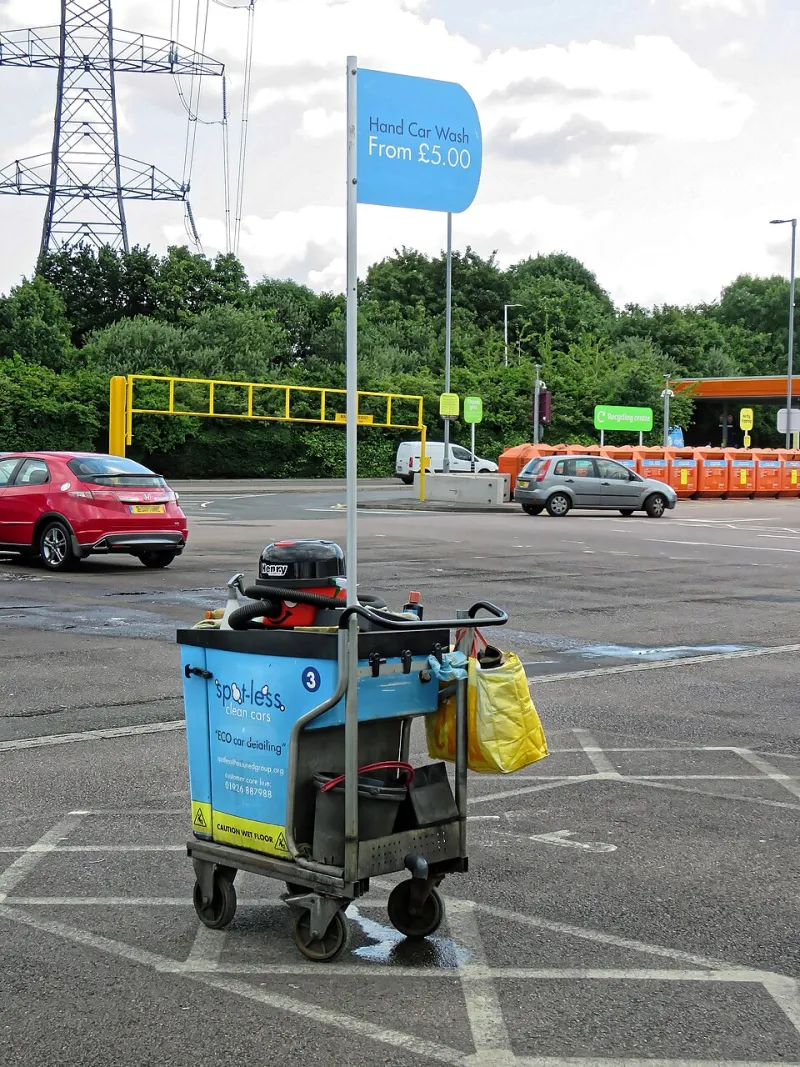
Photo: Acabashi, CC BY-SA 4.0, via Wikimedia Commons
For many UK households, off-street parking is an aspiration rather than a reality. Terraced streets, converted flats and city-centre crescents often leave drivers with nothing more than a shared kerb and a permit disc. A mobile valet can still deliver a showroom-standard result in these conditions, but the job begins with a different kind of preparation: a kerbside compact between driver, valeter, neighbours and the local parking regime. The aim is not to recreate a private driveway on the public highway. It is to make the most of the space that exists, without inconvenience or unnecessary risk.
Begin with the bay, not the bucket
Before choosing a package, read the parking signs. Residents' permit zones, pay-and-display bays, loading restrictions, school streets and timed waiting areas all change what is possible. A valeter cannot legally create a space where none exists, and a booking should never depend on stopping in a bus lane or on double yellow lines. Check whether the chosen bay has a time limit that fits the service. A maintenance wash may be completed within an hour; a full interior and exterior valet may not.
Ask the operator whether they are insured to work at the kerbside and whether they carry their own water and power. If a permit is needed, confirm visitor arrangements in advance. Some councils offer temporary dispensations or parking suspensions for works; others do not. In 2026, many mobile valeters are experienced with terraced streets, but familiarity is not permission. It is better to postpone a booking than to ask a technician to work beside a live traffic lane or in a bay reserved for residents.
Water, runoff and the surface beneath
A professional mobile unit should arrive self-sufficient. Rinse-less and waterless methods are common for kerbside work because they reduce the volume of runoff and the risk of foam reaching surface-water drains. Where a conventional wash is used, the valeter should control the water, use biodegradable products and avoid letting suds travel into gullies. Drivers should not assume that a residential street drains like a driveway. Surface-water drains often lead to rivers and streams, so a little restraint matters.
If the local authority publishes guidance on car washing, follow it. Avoid washing over fresh oil, fuel or paint spills, and ask how used towels and disposable gloves will be removed. A tidy finish includes the gutter as well as the alloy. The best operators will also carry containment mats or buckets for runoff where the street falls steeply towards a drain.
Courtesy is part of the service
On a terraced street, the pavement is a shared room. Tell immediate neighbours about the booking, especially if the van will occupy a bay outside their window. Move bins before the valeter arrives. Keep the pavement passable for prams, wheelchairs and delivery workers. Noise should be modest: no loud radios, no prolonged idling and no pressure-washer roar at breakfast time.
Do not ask a valeter to use a neighbour's tap or electricity without explicit permission. If the only practical bay is on the opposite side of the road, a brief word beforehand is worth more than an apology afterwards. The same applies to bin day: a wheelie bin in the bay can turn a two-hour booking into a missed appointment. Courtesy is not merely a social grace; it is an operational requirement.
Paint care in a tight kerbside space
Tight parking increases the chance of contact, so the method matters. Ask for a process that minimises leaning, trailing hoses and open doors. Rinse-less washing, multiple clean microfibre towels and gentle pre-treatment are often more suitable than a conventional two-bucket wash when space is limited. The valeter should not use a brush on paint and should keep wash media off the ground. Where possible, choose a quieter time or a slightly wider bay.
Door-edge guards and careful positioning help, but they do not replace technique. The paint should be assessed under daylight before work begins, and any pre-existing scratches or scuffs should be recorded. In autumn and winter, grit and salt should be rinsed from arches and sills with controlled water, not chased into the road with a torrent. On a narrow street, the safest approach is usually the one that keeps water, equipment and people within a defined working area.
The brief: what to send before the van arrives
A concise digital brief saves time and prevents misunderstandings. Include the exact location, a what3words reference and which side of the street the car is parked on. State the parking controls that apply and any time limit. Give the vehicle make, model, colour and registration, along with known defects and photographs of pre-existing damage. Confirm whether keys need to be handed over, how payment will be made and what the valeter should do with waste.
It is also worth asking for before-and-after photographs and a simple sign-off at the end. If the car is leased, note that cosmetic wear and cleaning are different matters; a photographic record protects both parties. Finally, agree a weather fallback. A windy day can blow grit onto wet paint, and heavy rain makes kerbside work both uncomfortable and less effective.
A realistic outcome
A terraced-street valet is not a substitute for a bodyshop or a dedicated paint-correction studio. It is a maintenance service, and done well it can be a considerable improvement. The best operators will temper expectations and explain what is achievable without a private driveway. The showroom shine can still be delivered to the kerbside; it simply requires a little more thought before the first rinse. Empire Valeting Services works on that principle: polished, practical care, adapted to the street rather than imposed upon it.