The Driveway Is the New Forecourt: Why Mobile Valeting Makes Sense in 2026
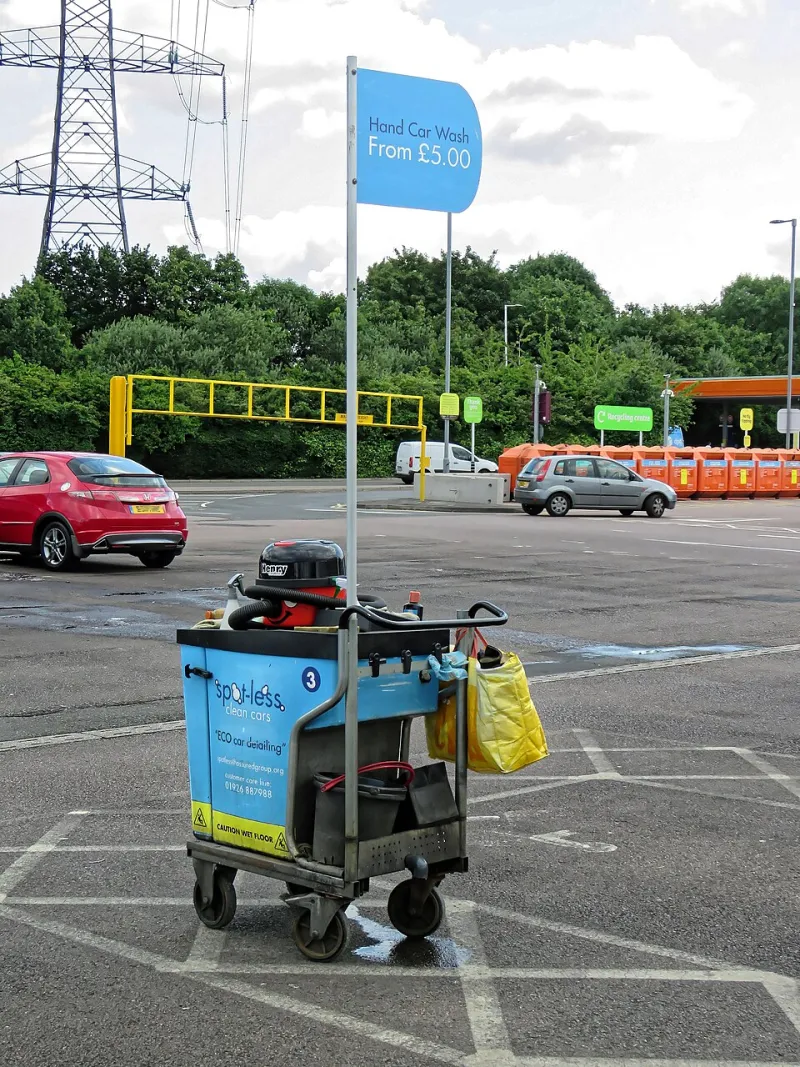
Photo: Acabashi, CC BY-SA 4.0, via Wikimedia Commons
For years, the Saturday morning forecourt wash was a British ritual: queue, pay, wait, and inspect the results under fluorescent lighting. In 2026, that ritual looks increasingly out of step with how households actually organise their time. Mobile valeting has moved from a niche convenience to a credible mainstream option, and the phrase showroom shine, delivered to your driveway is no longer just a marketing line. It describes a different model of car care — one built around appointment slots, controlled methods and long-term paint preservation rather than throughput.
From the Weekend Queue to the Scheduled Slot
The forecourt model asks customers to spend a substantial part of a weekend on a task that provides no leisure value. Add travel time, queuing and the risk of a rushed wash, and the true cost is considerably higher than the ticket price. A mobile appointment removes the journey and the wait. The operator arrives with water, power and equipment, and the vehicle is cleaned in the place where it is parked. For time-poor households, that shift is the real upgrade. It is not simply about convenience; it is about converting a fragmented errand into a scheduled maintenance task.
The Method Matters More Than the Van
Mobile valeting is sometimes assumed to be a bucket of water and a sponge in a van. The reputable end of the market is very different. Rinseless washing uses a pre-treatment spray and heavily lubricated microfiber towels to lift dirt with minimal water. Waterless products are suitable only for lightly soiled vehicles and should not be used on a salt-covered winter car. Both methods are technique-sensitive: the wrong towel discipline will create swirl marks faster than a traditional hose wash. A professional operator will explain the method before starting and will use clean, colour-coded towels, soft wheel brushes and a pH-neutral chemistry suited to the vehicle's finish.
What Showroom Shine Should Actually Mean
Showroom shine is often used to describe gloss, but gloss alone is a poor measure of car care. A vehicle can look bright in flat light while carrying bonded iron, tar and salt residue. A proper mobile valet should include safe washing, contamination removal, careful drying and a protective layer. It should also include the areas that forecourt washes frequently miss: door shuts, sills, wheel arches, fuel flaps and the edges of panels. Long-term paint care is cumulative. A car that is washed safely every month will usually outshine one that receives an annual aggressive polish.
Vetting a Mobile Operator: A Practical Framework
The mobile valeting sector is unregulated, which makes due diligence important. A reputable operator should be able to confirm public liability insurance, describe the products and methods used, and provide recent before-and-after photographs of similar vehicles. Reviews should be specific rather than generic. Ask how water and power will be supplied, what happens in poor weather, and whether the price includes wheels, arches and door shuts or treats them as extras. A professional will welcome these questions. Aggressive upselling, cash-only arrangements and vague product claims are reasons to pause.
The Economics and the Environment
Mobile valeting is not automatically cheaper than a forecourt wash, and it should not be sold as such. The comparison is between a low-cost, high-volume wash and a more controlled service that takes longer and uses better materials. For many drivers, the value lies in frequency: a monthly maintenance valet costs less over a year than remedial paint correction. Water use also deserves scrutiny. Rinseless methods can use only a few litres per vehicle, while a traditional hose wash can use considerably more. Route planning and grouped appointments further reduce the environmental cost of travel.
Where Mobile Valeting Fits in a 2026 Care Calendar
Mobile valeting is best understood as maintenance, not restoration. It suits regular washing, decontamination, sealant top-ups and interior care. It does not replace a bodyshop for paint correction, dent removal or structural repair. The smartest schedule is seasonal: a pre-winter protection valet, monthly maintenance through the salt months, and a post-winter decontamination in early spring. That rhythm keeps the paint in a condition where a light polish is all that is needed, rather than a full correction.
The forecourt will not disappear. It still serves drivers who need a quick exterior wash and have no alternative. But the driveway has become a legitimate service location, and the operators who treat it as a professional workshop — with proper insurance, disciplined methods and transparent pricing — are raising the standard for everyone. Showroom shine delivered to your driveway is a promise worth testing. When it is backed by method rather than marketing, it is also the smartest car-care upgrade many UK drivers will make in 2026.