Gradient Ground Rules: Commissioning a Mobile Valet on a Sloping Driveway
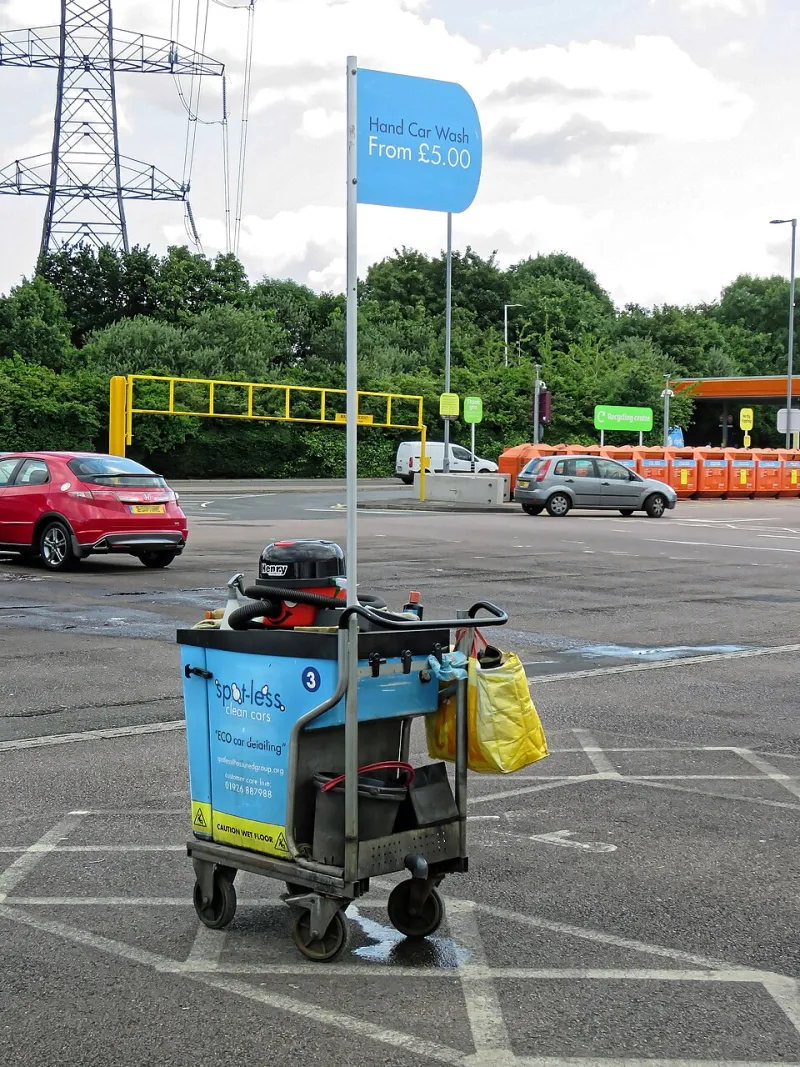
Photo: Acabashi, CC BY-SA 4.0, via Wikimedia Commons
An inclined driveway is rarely just a cosmetic quirk. It alters where water collects, how a valeter stands, how long a product remains on paint and how quickly a hose becomes a trip hazard. For UK homeowners booking a mobile visit, the useful question is not whether a slope can be washed but whether it can be worked on safely and to a sensible standard. A polished result depends as much on the site as on the shampoo.
Read the gradient before the bucket appears
Start at the bottom of the drive and look back up it. Note the severity of the slope, the surface - block paving, tarmac, resin-bound gravel or loose stone - and any crossfall that sends water towards a garage, wall or neighbour's boundary. Check where the driveway meets the pavement and whether there is a drain, channel or kerb that could receive runoff. Take photographs in daylight and share them with the valeter before the booking. A drive that looks gentle from the road can feel considerably steeper once a bucket is in hand and a hose is underfoot.
The handbrake is only part of the parking plan
On any incline, the vehicle should be left with the parking brake firmly applied, the transmission in gear or park, and the wheels chocked where the gradient warrants it. The handbrake alone is not a substitute for chocks on a steep drive, particularly when the car is wet and the surface is slick. A professional valeter should confirm these points before starting and should decline the job if the slope, surface or access makes safe movement doubtful. No valeting task justifies working beneath a vehicle or reaching across a wheel arch from an unstable stance.
Where the water goes matters
Wash water carries shampoo, traffic film, brake dust and road grime. On a slope it travels quickly. Keep runoff away from neighbours' boundaries, planted borders and garage thresholds, and prevent it from flowing across a public footway where it could create a slip hazard. In the UK, local expectations for disposal vary; a responsible operator will avoid directing contaminated water into a surface-water drain where that is not permitted and will use containment mats, berms or controlled rinsing where needed. If the drive drains towards a blind corner or a shared access, discuss the route with the valeter before any water is applied.
Dilution, dwell time and the pull of gravity
Products behave differently on an incline. Pre-mix shampoos and cleaners at the stated ratio rather than pouring concentrate onto a panel and hoping rain will dilute it. Use a two-bucket method with grit guards, keep the wash mitt clean and work in smaller sections. Gravity pulls foam and water downhill, so a panel that is wet at the top may be drying at the bottom before the mitt arrives. Rinse from the top down, keep the lower panels until last and avoid letting any cleaner dry in direct sun or on warm trim. Wheels and lower sills often need a second pass because they collect the runoff from everything above.
Streaks on panels that never sit level
A car parked on a slope never drains evenly. Water sits in door shuts, around badges, behind mirrors, in spoiler recesses and along trim edges. That is where streaks and water spots begin. Dry promptly with clean microfibre towels and use a blower or drying aid on awkward areas. Work with the fall of each panel, not against it, and check horizontal surfaces that may hold a thin film of water. If the drive is steep enough that the car cannot be moved to a level area for finishing, agree a realistic standard: a careful maintenance wash may be more appropriate than a full valet that promises a flawless finish.
Briefing the valeter
Provide the gradient, surface, drainage and access details in advance. Mention any shared driveway, tight gate, low wall, fragile planter or parking restriction. Confirm where water and power can be taken safely and whether the hose can reach without crossing a footpath. Ask whether the operator carries chocks, containment equipment and cordless tools, and whether they are willing to work on the slope at all. A short written brief is better than a doorstep discussion. At Empire Valeting Services, the driveway assessment is treated as part of the job, not an interruption to it.
Full valet or maintenance wash?
An inclined drive can still host a full valet if there is safe standing room, controlled runoff and a level area for finishing. Where the slope is severe, the surface is loose, drainage is poor or the car must remain on the incline throughout, a maintenance wash is usually the wiser choice. That might mean a rinse-less or waterless product used sparingly, a focused clean of glass, wheels and contact points, and a prompt dry. It is not a lesser service; it is the correct service for the site.
A final walk-round
After the visit, check that no water is standing against the garage door, that runoff has not stained the boundary wall and that the hose has been coiled clear of the footpath. Remove chocks only when the driver is in the vehicle and in control. A sloping driveway rewards preparation. Read the gradient, secure the car, manage the water and match the service to the site - then the shine is the least surprising part of the result.